
10 Castles – ornaments of Europe
Castles and knights, dragons, Kings and battles. Maybe some were fantastic and some...

Have you ever wondered if what we heard and later saw in movies as kids were just legends and fairy tales or did they have a dose of truth in them? Castles and knights, dragons, Kings and battles. Maybe some were fantastic and some weren’t!
But the only thing certain is that the legends from the Middle Ages remain alive together with the Castles that have withstood the end of time. Some of them decorate the European countries, giving them a more “Knightly” breath.
1. Trakai Castle, Lithuania
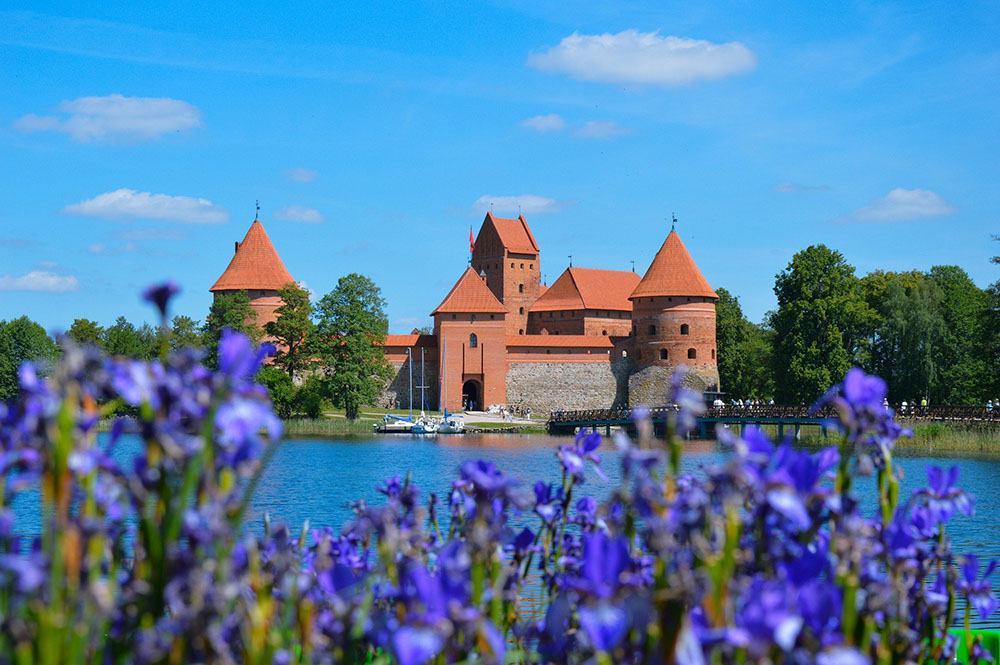
An enchanting green landscape with lakes and small tree-covered islands is the place where every blue-blooded person would like to build his castle. Between the 14th and 15th centuries on one of the islands of Lake Galvė the Grand Duke Kęstutis of Lithuania started its construction, while it was completed by his son Vytautas and is considered an excellent example of medieval defensive architecture, as the water level of the lake at that time season was 2 meters higher. With a modest interior, you will be able to see the rooms and halls, walk around the castle and of course visit its exhibitions. The museum includes 400,000 exhibits which will certainly transport you back in time.
2. Malbork Castle, Poland
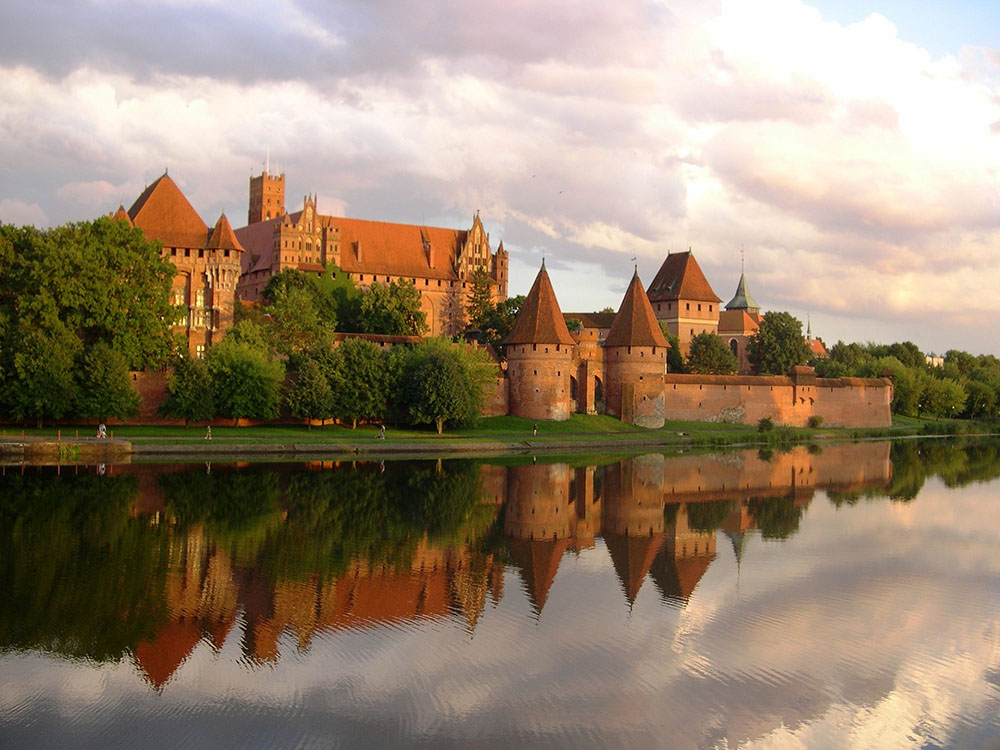
Malbork, one of Poland’s most impressive castles is located on the banks of the Nogat River near the Baltic Sea. He belongs to the Order of the Teutonic Knights, one of the three chivalric orders that participated in the Crusades along with the Knights Templar and the Order of St. John. It started in the 14th century as a monastery, but it soon became clear that it could not serve the growing needs and thus began an expansion that lasted about forty years, transforming it from a simple monastery into a very well-fortified and large castle. You will need 2.5-3 hours to see it as it is well preserved and generously allows you to explore the huge dining hall with its large wooden tables and benches, the rooms, the kitchens, the mill, the brewery, the stables the church and chapels.. It also has a museum with icons, armour, statues, coins, weapons exhibition and many many more exhibits.
3. Mont Saint-Michel Castle, France

One of the most impressive castles in France is this Mont Saint-Michel. A castle – Monastery – built on a small island in a beautiful bay in Normandy, at the mouth of the river Couesnon is now a UNESCO World Heritage Site. It was built in the 8th century by Bishop Aubert who was based on a vision he saw, where the Archangel Michael instructed him to build a place of worship at the Couesnon estuary. Aubert initially paid no attention but the Archangel visited him again by making a hole in his head to remind him. In the royal church of Saint-Gervais located in the nearby town of Avranches you can see Aubert’s skull with the scar of the Archangel. Over the years, this neo-Gothic castle has received many interventions. One of them is the ramparts which were added much later to prevent the invasion of the English. Taking a walk in the old shops and the streets of the castle, they will make you understand the then life through the walls.
4. Bojnice Castle, Slovakia

On a small hill above the town of Bojnice, the town castle dominates. The first mention of the castle’s existence is found in Zobor Abbey documents from 1113. It was originally wooden and gradually built of stone by the Poznań family in the 13th century. Count Jan Frandisek Palfi acquired the estate with the castle in 1852. Using as models the French Gothic castles, the papal palace in Avignon, the Gothic castles of the Tyrol and the early Renaissance Italian architecture he gave another “breath” to the castle. The rebuilding took about twenty-two years, however Palfi did not live to see it completed as he died two years before it was finished. Now the castle is part of the Slovak National Museum.
5. Eilean Donan Castle, Scotland
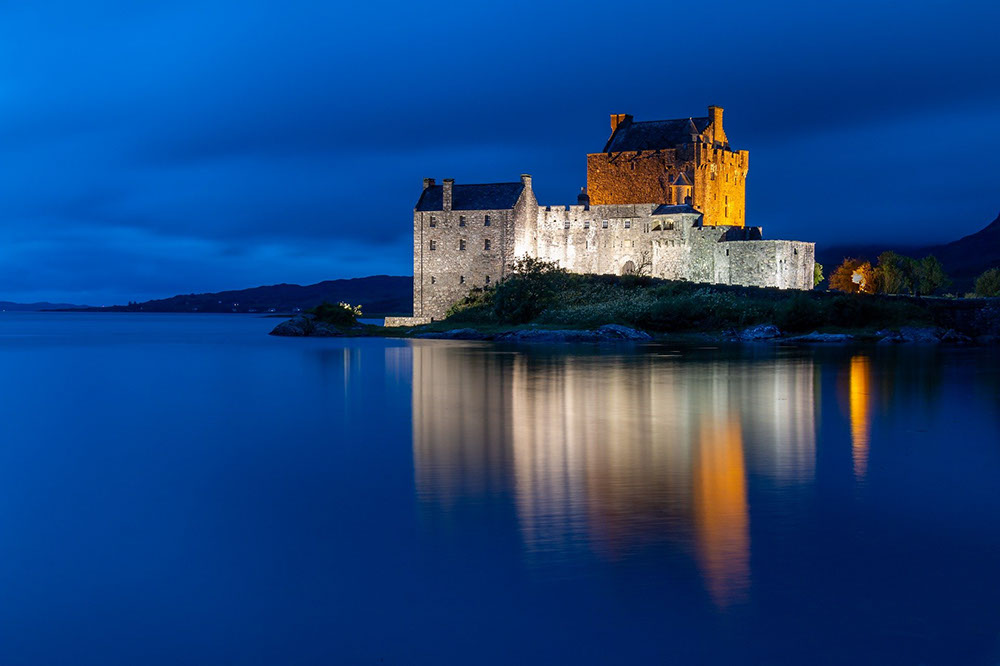
On a small island in a lagoon in the Highlands of Scotland, only connected to the mainland by a sturdy stone bridge you will find Eilean Donan Castle. The Scottish landscape combined with the austerity of the castle make it one of the most popular castles in the United Kingdom. The films Highlander, James Bond – The world is not enough, The New Avengers and Loch Ness were filmed here. It was first inhabited around the 6th century. but it took the form of a fortified castle in the 13th century. In 1719 part of it was destroyed and remained so until 1911 when Lieutenant Colonel John MacRae-Gilstrap bought the island. After about twenty years of work, the castle was reopened in 1932 and since then it also functions as a center where those who want a royal wedding can get married.
6. Aggstein Castle, Austria

Surrounded by green hills, on the banks of the Danube and built in the 12th century. from the Kuenrings family is Aggstein Castle. In 1429 it passed into the ownership of Jörg Scheck vom Wald. During his time the castle became known as “the forest of terror” as Scheck robbed merchant ships passing through the Danube. A century later the Ottomans set it on fire and in 1606 the new owner began its renovation. Throughout the year, the castle hosts various festivals, creative workshops where you can for example make your own obsidian knife and treasure hunts.
7. Visconteo Castle, Switzerland

It is not considered an impressive castle as we are used to, but what makes it special is that it was built and designed by Leonardo Da Vinci. It is located in the town of Locarno near the Italian border and was built in the 12th or 13th century. During the period of the wars with Milan, Rivellino was built by Leonardo Da Vinci, i.e. a defensive fortress. It is considered Da Vinci’s unique military construction with a pentagonal shape and a wall nearly 4 meters thick that has not undergone any conversion to date and is studied as an example of Renaissance war technology. Above the points where the cannons were located there was a special ventilation system for the fumes from the gunpowder, something that is obvious to us now, but not in the 16th century. The castle now functions as a museum.
8. Örebro Castle, Sweden

Named after the town where it is located, Örebro Castle is a massive, tall stone building in the river Svartan, which gives it the feel of a large moat. Many members of the Swedish royal family have passed through this particular castle. You can wander from the dank, dark dungeons of the castle for prisoners of war, thieves and witches to the magnificent halls built for kings. It is estimated that it was built somewhere in the Middle Ages, possibly in the 14th century. What is certain is that along the way he received many interventions, one of which gave him a Renaissance style, while he then adopted a more modest classical style. In the 19th century an attempt was made to restore its Renaissance style.
9. Bled Castle, Slovenia

Bled Castle dominates the top of a high cliff on the shores of the lake of the same name. The view of the enchanting green landscape with the lake and the snow-capped mountains around are worth visiting. It is one of the oldest castles in Slovenia and one of the best-preserved citadels in the country, with the first references to it dating back to 1011. Over the years, the castle has suffered great damage from natural phenomena such as two lightning strikes which caused a fire but and an earthquake that made it unsafe for habitation. The last, most recent, repairs were made in such a way that it can be easily visited by tourists. In the castle, in addition to the various rooms, you can also see the printing press with an exact replica of a Gutenberg wooden press where they made various prints, the wine cellar, the chapel with the frescoes, etc.
10. Dunluce Castle, United Kingdom – Northern Ireland

Dunluce was a popular site for the early Christians and the Vikings. Built on a rock, it is protected on three sides by a steep cliff that, combined with the wild sea and the rugged landscape, make it have a unique eerie beauty. The original castle dates back to around the 13th century. however, most of the ruins belong mainly to the 16th and 17th centuries. It communicated with the mainland by a stone bridge which has now been replaced by a more modern one. Dunluce has associated its name with stories and legends of dark spirits that inhabit its corridors. If you’re brave stay late to watch the sun set behind the towers.


